Sensitive Detection and Quantification of siRNA Using ModDetect®
ModDetect® monoclonal antibody panels, originally developed for the detection and quantification of antisense oligonucleotides (ASOs), have now been optimized for use with small interfering RNA (siRNA). siRNAs represent a rapidly growing class of RNA therapeutics that rely on RNA interference to silence disease-causing genes, with several FDA-approved drugs already on the market. This application guide outlines a sandwich ELISA protocol using ModDetect antibodies to sensitively detect siRNA chemical modifications independent of sequence.
The method was validated using the FDA-approved siRNA drug Lumasiran, demonstrating how ModDetect can provide reliable quantification even for molecules with fewer PS linkages than typical ASOs.
Overview
The rapid expansion of RNA therapeutics has increased the need for robust analytical tools capable of detecting and quantifying chemically modified oligonucleotides in biological systems. While ModDetect® antibodies have previously been used to study antisense oligonucleotide (ASO) distribution, localization, and trafficking, this application note extends the platform to small interfering RNA (siRNA).
ModDetect® monoclonal antibodies recognize specific oligonucleotide chemistries independently of nucleic acid sequence and are available against commonly used therapeutic modifications including phosphorothioate (PS), 2′-MOE, 2′-OMe, and 2′-F.
This methods guide demonstrates optimized approaches for detecting siRNA using ModDetect® anti-OMe antibodies in both:
- Sandwich ELISA for quantitative analysis
- Immunofluorescence microscopy for intracellular localization
The workflows were validated using the FDA-approved siRNA therapeutics lumasiran, inclisiran, and nedosiran.
Why Use Anti-OMe Antibodies for siRNA Detection?
Although phosphorothioate (PS) modifications can be used for siRNA detection, most siRNA therapeutics contain a substantially higher density of 2′-OMe modifications relative to PS linkages. This increased epitope availability results in improved assay sensitivity when anti-OMe antibodies are used for detection.
In many siRNA constructs, PS modifications are also localized primarily near strand termini, which may reduce antibody accessibility due to steric constraints. In contrast, 2′-OMe modifications are typically distributed throughout the duplex, enabling more efficient and reproducible antibody binding.
As a result, ModDetect® anti-OMe antibodies provide:
- Increased assay sensitivity
- Sequence-independent detection
- Broad compatibility across siRNA designs
- Improved performance in quantitative workflows
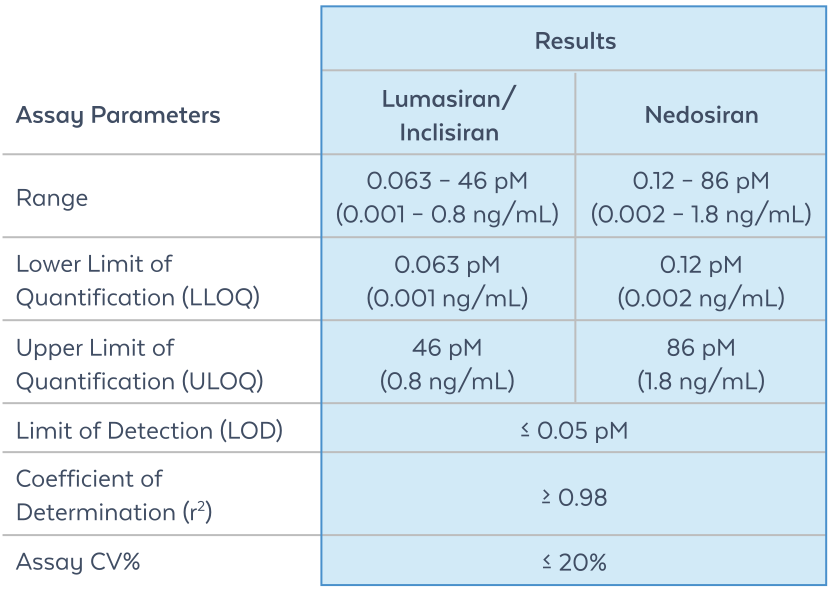
Quantitative siRNA Analysis by Sandwich ELISA
A sandwich ELISA format was developed using unconjugated ModDetect® anti-OMe antibody for capture and biotinylated anti-OMe antibody for detection. This configuration enables recognition of non-overlapping 2′-OMe epitopes within the siRNA duplex.
Using this approach, siRNA can be quantified with high specificity and reproducibility across chemically modified therapeutic constructs.
Key Features
- Sequence-independent detection
- Sensitive quantification of OMe-modified siRNA
- Compatible with multiple therapeutic siRNA chemistries
- Reproducible assay performance
- Applicable to biologically relevant samples
The application note includes optimized assay conditions and validation data generated using lumasiran, inclisiran, and nedosiran.
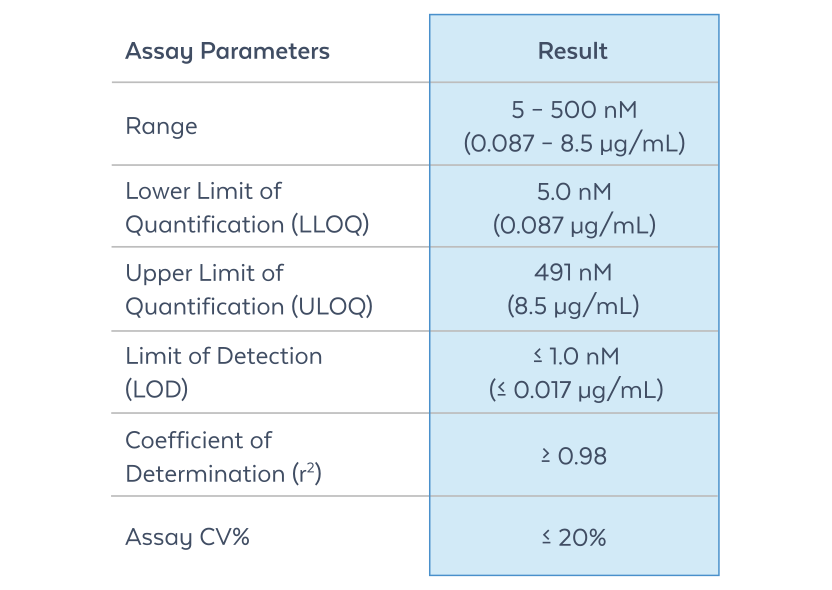
Immunofluorescence Visualization of Intracellular siRNA
In addition to plate-based quantification, ModDetect® anti-OMe antibodies support spatial analysis of siRNA by immunofluorescence microscopy.
Because 2′-OMe modifications are distributed throughout many siRNA duplexes, anti-OMe antibodies function as sequence-independent probes capable of detecting intracellular siRNA following uptake and fixation.
To demonstrate this application, HeLa cells were transfected with lumasiran and stained using ModDetect® anti-OMe monoclonal antibodies under optimized immunofluorescence conditions.
This workflow enables:
- Visualization of intracellular siRNA localization
- Analysis of cellular uptake
- Evaluation of subcellular trafficking
- Imaging across chemically diverse siRNA designs
Applications
ModDetect® anti-OMe antibodies support a range of analytical workflows for RNA therapeutics research, including:
- siRNA quantification Cellular uptake studies
- Intracellular localization analysis
- Trafficking studies
- Comparative formulation analysis
- Sequence-independent detection of modified oligonucleotides
Lumasiran, inclisiran, and nedosiran are referenced as representative siRNA therapeutics for assay validation purposes only. No endorsement or affiliation with the respective manufacturers is implied.