Custom Antibody Conjugation Services
Rockland offers more than antibody conjugation. With expertise spanning antibody generation, purification, conjugation, and quality control, we can support multiple stages of your project within one organization. From producing the starting antibody to purifying and evaluating the final conjugate, our integrated capabilities help streamline the process of developing reliable reagents for your research or application.
Whether you need a fluorescently labeled antibody, an enzyme conjugate for an immunoassay, an antibody-oligonucleotide conjugate, or a custom immobilized protein, we work with you to identify an approach that fits your molecule and the demands of your application. When a standard conjugation method isn't a right fit, our team can evaluate alternative chemistries and optimize reaction conditions for your project.
Choosing the Right Conjugation Chemistry
Conjugation chemistry influences where a label or functional molecule attaches, the stability of the resulting bond, and how the modification affects the structure and function of the antibody or protein. Selecting the right approach requires considering the starting material, available functional groups, desired degree of labeling, and requirements of the final application.
Random Conjugation
Attaches labels through available reactive groups on a molecule. Depending on the molecule and chemistry, approaches may target primary amines, thiols, carboxyl groups, or carbohydrates. Random conjugation can be suitable when an established labeling methods meets the application's requirements.
Site-specific Conjugation
Targets a defined site or an introduced chemical handle, providing greater control over where the modification occurs. This can be particularly valuable when conjugation location may affect binding, biological activity, or other functional properties. Available approaches include click chemistry, enzymatic ligation, and glycan engineering.
For example, NHS ester chemistry can attach labels to primary amines, including lysine residues, while maleimide chemistry targets available thiol groups, commonly associated with cysteine residues. Click chemistry can join molecules equipped with compatible reactive groups.
Our range of conjugation chemistries and linker options allows us to tailor the approach to your project rather than rely on a single labeling method.
Antibody and Protein Conjugation Options
Rockland offers a broad range of conjugation options from established labeling approaches to specialized reagent development.
Biotin Conjugation
Choose from catalog biotin-conjugated products or work with Rockland to optimize the degree of labeling for your application.
Fluorescent Dye Conjugation
Optimization of the dye-to-protein ratio to help minimize self-quenching, while preserving antibody binding and function.
Enzyme Conjugation
Including horseradish peroxidase (HRP) and alkaline phosphatase (AP) for applications such as immunoassays.
Protein Conjugation
Including streptavidin, Protein A/G, and R-phycoerythrin (R-PE), with linker options selected for the conjugation strategy.
Antibody-Oligo Conjugation
Custom approaches using click chemistry, carbonyl chemistry, and lysine- or cysteine-based conjugation.
Hapten-carrier Conjugation
Custom conjugation using amine-, carboxyl-, or cysteine-based approaches, with antibody generation also available.
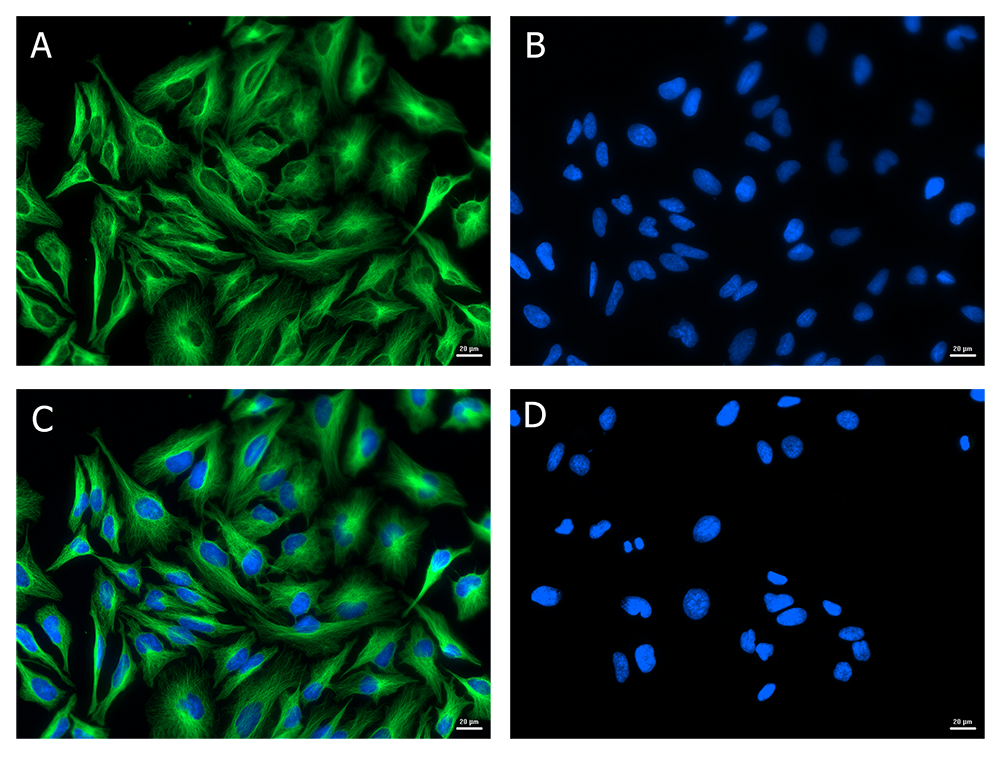
Fluorescence Imaging of Alpha-Tubulin in HeLa Cells
Alpha-tubulin was detected in methanol-fixed, permeabilized HeLa cells using a mouse anti-alpha-tubulin primary antibody (#200-301-880) and DyLight™-conjugated goat anti-mouse secondary antibody (#610-141-121). Nuclei were counterstained with Hoechst 33342. Alpha-tubulin exhibits cytoplasmic localization.
Beyond Antibody Labeling
Rockland's conjugation capabilities extend to protein immobilization and other specialized applications where attaching a molecule to a surface, resin, or partner molecule is central to the project.
Resin Conjugation & Protein Immobilization
We offer custom and catalog immobilization options for antibodies, proteins, glycoproteins, peptides, and host cell proteins (HCPs). Available approaches include lysine-, cysteine-, carboxyl-, and aldehyde-based chemistries.
Custom Conjugate Development
When a standard conjugate or established protocol doesn't meet your needs, Rockland can evaluate alternative conjugation approaches and reaction conditions. The object is to develop a conjugate suited to the intended application, with consideration for labeling, stability, and retention of relevant biological function.
Production & Quality Control
Conjugation is only part of the process. Purification helps separate the desired conjugation from other components, while appropriate quality helps establish whether the resulting material meets the requirements of its intended use. Rockland offers multiple purification approaches, including size-exclusion chromatography (SEC), ion-exchange chromatography (IEX), dialysis, and ultrafiltration, along with additional methods selected according to the conjugate and project requirements.
Quality control can be performed on conjugates to evaluate relevant product characteristics. The QC approach is selected to evaluate the characteristics that matter for your conjugate and its intended use.
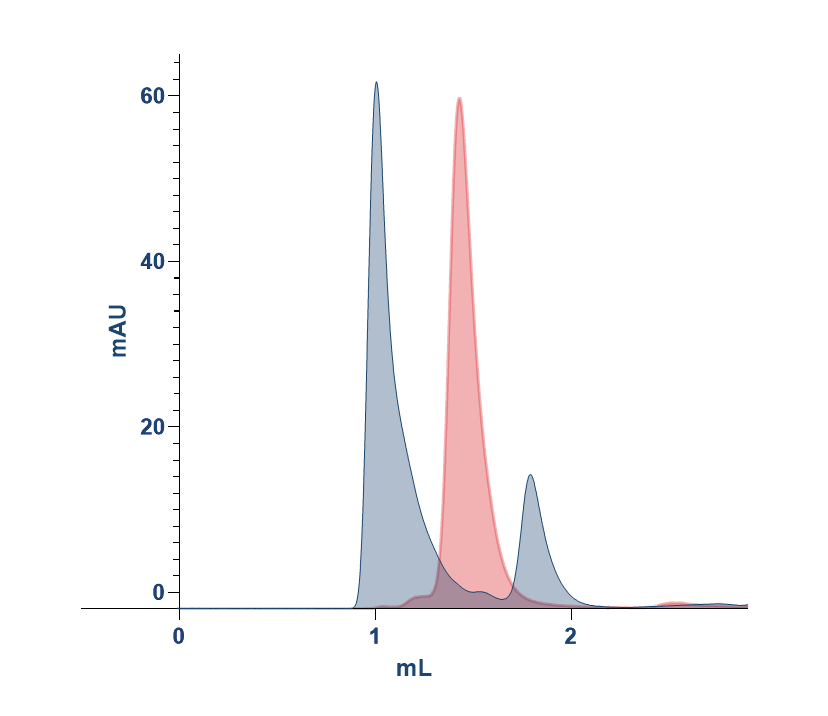
From Starting Material to Purified Conjugate
By bringing antibody generation, purification, conjugation, and final conjugate purification together, Rockland can support projects across multiple stages of reagent development. This integrated approach provides a single partner for customers who need more than a labeling step.
Whether you are working with a Rockland antibody or protein or supplying your own starting material, our team can work with you to determine an appropriate conjugation approach based on your project requirements.