Chat with us, powered by LiveChat


Overcoming Barriers in Oligonucleotide Detection and Analysis

Accurate detection of oligonucleotides (ONTs) is essential for demonstrating delivery, safety, and efficacy at every stage of drug development. However, current analytical tools are often complex, sequence-dependent, and limited in their ability to detect chemically modified ONTs in serum, cells, and tissues. This gap makes it challenging to generate the robust data needed to advance the best candidates.

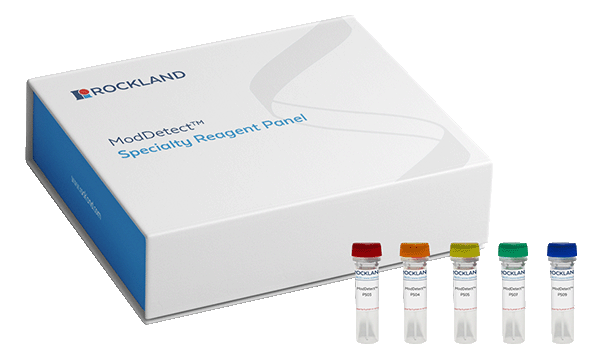
ModDetect antibody panels provide reliable, sequence-independent detection of ONTs across a wide range of chemical modifications and assay platforms. Unlike conventional methods, ModDetect works independently of nucleic acid composition, structure, or strandedness, offering researchers a flexible and universal approach to ONT detection.

Explore our Poster: Localization and Quantification of Oligonucleotide Therapeutic Drugs with PS, 2'-MOE, and 2'-OMe Panels

ModDetect Modifications

A Better Way to Analyze RNA Therapeutics

Classical assays remain the foundation for characterizing antisense oligonucleotide (ASO) efficacy and safety, but they are strongly influenced by length, sequence, and chemical modifications of the target oligonucleotide. Many suffer from a general lack of sensitivity needed for preclinical assays, creating an unmet need for alternatives. ModDetect provides sensitive and versatile tools for visualization, quantification, and detection in immunocytochemistry (ICC), ELISA, immunohistochemistry (IHC), and other standard immunoassays.

Read our Application Guide: Methods for Analysis of Oligonucleotide Drugs

ADME (Absorption, Distribution, Metabolism, Excretion)​
Discovery
Pre-Clinical / Clinical / Non-Clinical
Types of Assays
Mod-ELISA.png
ELISA/ADA &
Immunogenicity Studies
Mod-Studies.png
IP/Protein Binding
Mod-ADA.png
In Vitro Cell Culture/
Potency Studies
Mod-IHC.png
IHC/Biodistribution
Mod-IF.png
IF/Intracellular
Localization


Why ModDetect®

ModDetect Universal Detection

Universal Detection

Reproducible immunoassay detection of modifications independent of sequence and without labels or tags

ModDetect Broad Application

Broad Application

Validated in serum, cells, and tissues, and compatible with ELISA, IF, IHC, and more for use across research and preclinical pipelines

no sophisticated equipment

Accelerated Development

Save 9-12 months in drug development with faster candidate triage and simplified preclinical evaluation


How ModDetect Compares

The ModDetect® platform delivers high sensitivity (~1 pM), fast throughput, and universal detection for ASO quantification. The table below compares ModDetect to LC-MS, hELISA, branched DNA, and qPCR, highlighting its ability to match leading methods in sensitivity while reducing complexity and eliminating the need for sequence-specific probes.

ModDetect comparison to other methods for ASO

Featured ModDetect® Publications

Bioanalytical Assays for Oligonucleotide Therapeutics: Adding Antibody-based Immunoassays to the Toolbox as an Orthogonal Approach to LC-MS/MS and Ligand Binding Assays
Chimento, D.P. et al. Nucleic Acid Therapeutics, 2025.

READ PUBLICATION

Characterizing Antibodies Targeting Antisense Oligonucleotide Phosphorothioate and 2′-O-Methoxyethyl Modifications for Intracellular Trafficking and Biodistribution Studies
Fial, I. et al. Nucleic Acid Therapeutics, 2025.

READ PUBLICATION

Investigating the Biophysical Properties and In Vivo Activity of 7′,5′-Alpha-Bicyclo-DNA Phosphodiester Backbone Gapmer Antisense Oligonucleotides.
Evequoz, D. et al. Nucleic Acid Therapeutics, 2026.

READ PUBLICATION


Frequently Asked Questions

Traditional oligonucleotide detection methods typically require the development of sequence-specific probes, standards, or reagents for each individual therapeutic candidate. ModDetect antibodies recognize chemical modifications rather than nucleotide sequences. This allows researchers to use the same antibody strategy across multiple oligonucleotides sharing a target modification, streamlining assay development, biodistribution studies, and screening workflows.
ModDetect antibodies were developed to recognize commonly used oligonucleotide modifications, including phosphorothioate (PS), 2′-O-methoxyethyl (2′-MOE), and 2′-O-methyl (2′-OMe). Because the antibodies recognize the modification rather than the sequence, they can often be applied across multiple oligonucleotide structures that contain the target chemistry. Compatibility depends on your oligo’s chemistry, therapeutic type, and intended application. Our team can help identify the most appropriate panel for evaluation.
Each ModDetect panel contains five unique monoclonal antibody clones targeting the same modification. Performance can vary by assay format, sample type, and experimental conditions. Starting with a panel allows you to compare clones side by side and identify the antibody best suited for your workflow before committing to an individual clone. Evaluating multiple clones upfront often reduces development time and improves the likelihood of identifying the best-performing reagent for long-term use.
Most ModDetect antibodies are maintained as catalog products for prompt shipment. Lead times may vary based on inventory, product format, and customization requirements. Contact our team for current availability, estimated shipping timelines, and custom formulation inquiries.
Detection depends on the number and accessibility of target modifications. Internal evaluations have demonstrated detectable signal from oligonucleotides containing a single phosphorothioate (PS) linkage, although signal was significantly lower than with more heavily modified oligos. The optimal number of modifications required for robust detection may vary depending on the assay format and target molecule.
As with all antibodies, epitope accessibility, density, and distribution can affect antibody binding and assay sensitivity. Steric hindrance may also limit simultaneous antibody binding, particularly with closely spaced modifications. We recommend screening multiple clones and optimizing assay conditions for your specific oligo architecture.
ModDetect antibodies have been successfully used in a variety of sample types and species. Customer and internal studies have included human, non-human primate (NHP), and mouse samples. Performance may vary depending on tissue type, assay format, target abundance, and the specific clone selected. Some additional optimization may be required to address background in mouse tissue samples or nonspecific binding of endogenous biotin in some tissues.
ModDetect antibodies have been evaluated in several common immunoassay formats, including:
  • ELISA and MSD-based assays
  • Immunohistochemistry (IHC) and immunofluorescence (IF)
  • Flow cytometry
Conjugated, unconjugated, or custom antibody formats may be appropriate depending on your platform and workflow.
Not inherently. ModDetect recognizes chemical modifications, so it may also detect metabolites or fragments retaining the target modification. At present, ModDetect is not intended to inherently differentiate intact parent drug from all degradation products. In cases where this distinction is important, distinguishing intact drug from degradation products may require orthogonal methods or specialized assay designs. Rockland has explored heterologous sandwich formats using antibodies against different modifications to improve selectivity, although performance is oligo- and assay-dependent.
Yes. ModDetect antibodies are available as standard catalog products in unconjugated and biotinylated formats, with additional conjugation and formulation options available, including carrier- or preservative-free preparations.

Contact our team to discuss your assay requirements and customization options.