Identification of Feimin as a Novel Feeding-Induced Myokine
Previously unreported, Feimin was first identified in 2025 as a feeding-induced myokine, expanding the growing class of molecules involved in systemic metabolic regulation. Secreted from skeletal muscle during feeding, Feimin binds to its receptor, protein tyrosine kinase Mer (MERTK)1. Early studies suggest feimin to be a critical element in maintaining glucose homeostasis, linking to whole body metabolic control. Through its association with AKT signaling, Feimin has emerged as a protein of interest in pathways related to glucose regulation and insulin responsiveness, positioning it as a promising target for further metabolic, myokine, and neurocognitive research.
Feimin in Emerging Research
In a key publication, Shi et al. used hyperinsulinaemic-euglycaemic clamp experiments to investigate how feimin modulates glucose homeostasis and contributes to insulin sensitivity through enhanced glucose uptake and reduced glucose production1. These findings suggest Feimin's potential relevance in metabolic research areas such as diabetes and insulin resistance.
Beyond glucose metabolism, emerging evidence suggests Feimin may also play a role in lipid handling and neuroinflammation2. Gao et al. describe Feimin as a negative regulator in lipid droplet accumulation and microglial inflammation induced by a high-fat diet2. Using BV2 cell-based mouse models treated with palmitic acid, their results indicate that Feimin protects microglial cells from fat-induced inflammation by suppressing the AKT–mTOR pathway. Together, these early studies suggest Feimin may influence multiple biological processes across metabolic and neuroinflammatory pathways.
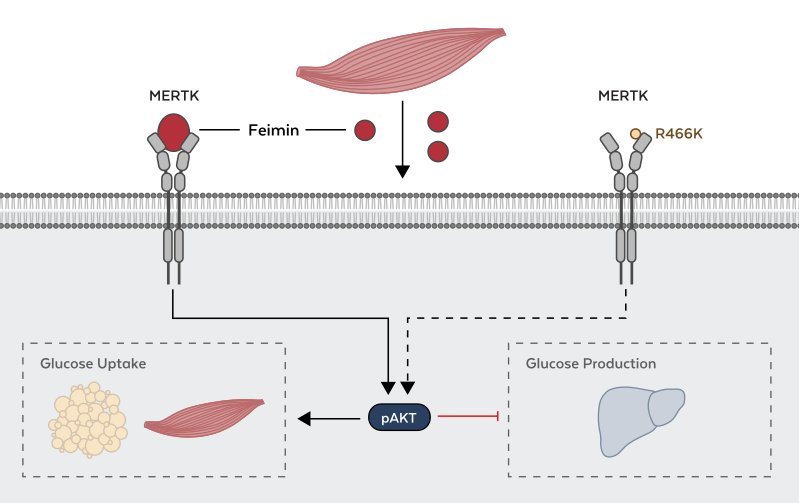
Figure: The role of feimin in glucose homeostasis.
Could Feimin Complement GLP-1 Signaling?
As research into Feimin continues to evolve, growing attention is being given to how muscle-derived myokines may interact with established metabolic signaling systems such as the GLP-1 pathway. While incretins like GLP-1 originate in the gut and primarily influence appetite, insulin secretion, and postprandial glucose control, Feimin represents a distinct muscle-based signal that may contribute through complementary biological mechanisms. This raises important questions about whether muscle-derived signals can work alongside gut hormones rather than replacing them, and whether glucose control and body composition are influenced by partially independent pathways.
Understanding these parallel mechanisms could help researchers explore how blood glucose regulation might be improved while preserving muscle biology, an area of increasing interest as metabolic interventions continue to advance. Anti-Feimin antibodies provide tools to support investigation of these questions by enabling detailed study of Feimin expression, signaling, and pathway interactions.
Featured Publications
A selection of key publications highlighting emerging research on feimin and its role in metabolic and neurocognitive regulation:

A Feeding-Induced Myokine Modulates Glucose Homeostasis.
Shi et al. (2025)
Nature Metabolism
View Publication
Microglial Feimin Alleviates Cognitive Impairment in High-Fat Diet-Fed Mice.
Gao et al. (2025)
PMC
View Publication
Cellular Feimin enhances exercise performance by suppressing muscle thermogenesis.
Peng, Y., Jia, L., Hu, X. et al. (2025)
Nature Metabolism
View Publication
Available Feimin Antibodies
These newly developed anti-Feimin antibodies provide the first dedicated tool to quantify and localize this pivotal metabolic regulator when investigating Type 2 Diabetes, metabolic syndrome, exercise physiology, and more.
| Product | Clonality | Reactivity | Size |
| Feimin Antibody | Polyclonal | Human, Mouse | 100 µg |
| Feimin (isoform 2) Antibody | Polyclonal | Human | 100 µg |
References